A genuine Savile Row bespoke suit is defined by a precise set of standards set by the Savile Row Bespoke Association: it must be cut by an individual from a paper pattern made specifically for the customer, involve a minimum of 50 hours of hand work, and pass through a series of fittings. The Row's own glossary defines bespoke as a suit "made on or around Savile Row, bespoken to the customer's specifications," cut by an individual and made by highly skilled individual craftsmen. Understanding these verifiable criteria—and how the British structured silhouette differs from the softer American tradition—is the key to distinguishing authentic Savile Row craftsmanship from looser uses of the word "bespoke."
Defining Savile Row Bespoke: The Official Standards
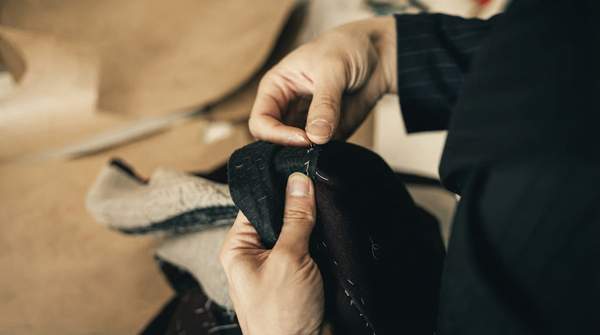
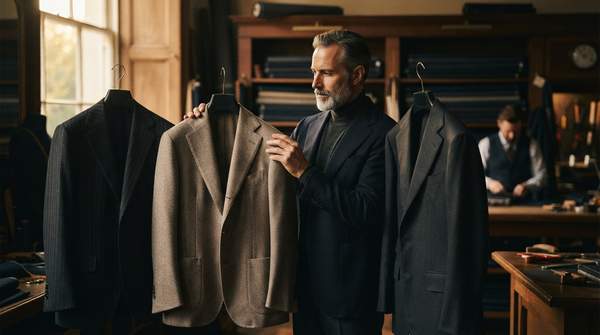
According to the Savile Row Bespoke Association's own tailoring terms, a bespoke suit is "cut by an individual and made by highly skilled individual craftsmen." The pattern is made specifically for the customer, and the finished suit must take a minimum of 50 hours of hand work and require a series of fittings. These are not marketing aspirations but the Association's stated definition of the term.
Writing on the standards required for Association membership, the tailoring guide Jesse & Son lists the same core requirements: individual paper patterns kept for future commissions, sufficient fittings to ensure perfect fit, hand-worked canvas construction, and personal service from a cutter who measures the client and supervises the garment. Together, these criteria form a checklist a client can actually verify.
The essential standards are:
- A unique pattern: a paper pattern made specifically for the customer and kept for future commissions.
- Individual craftsmanship: the suit is cut by an individual and made by highly skilled individual craftsmen.
- Minimum handwork: at least 50 hours of hand work per garment.
- Multiple fittings: a series of fittings, beginning with a "baste" fitting of the roughly assembled garment.
- Hand-worked canvas: canvas construction worked by hand rather than fused.
The Distinct British Silhouette and Construction
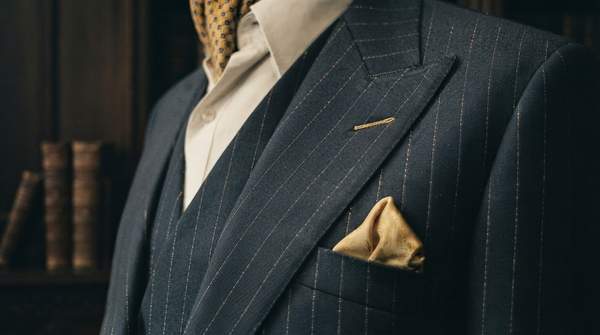
The British style, as described in the Jesse & Son guide, is defined by its structure. The silhouette features "structured, military-influenced shoulders with roped construction," and a defined waist suppression that creates an authoritative, V-shaped silhouette. This is the look that has dressed royalty, world leaders, and cultural icons since Henry Poole created the first dinner jacket on the Row in 1865.
Construction reinforces the silhouette: heavier canvas and interlining provide the suit's structure and durability. This is the technical heart of the tradition—the hand-worked canvas, required for Association membership, gives the chest and lapel a shape that holds over years of wear. The structured shoulder and heavier canvas together produce the formal, authoritative appearance associated with Savile Row.