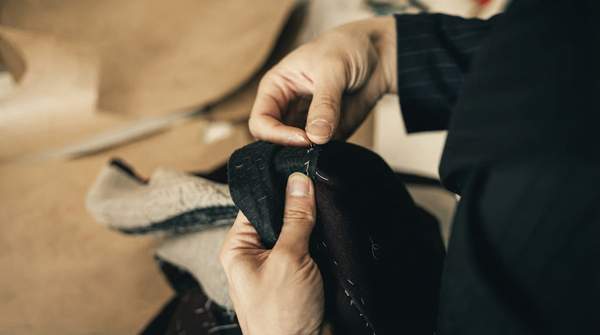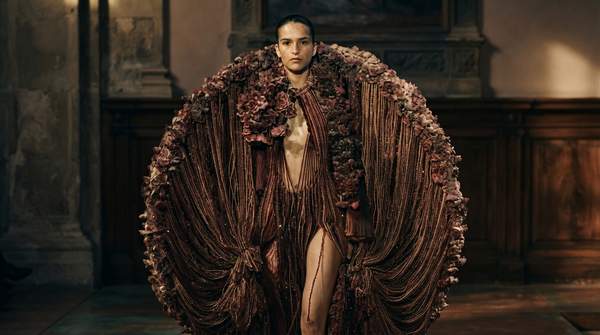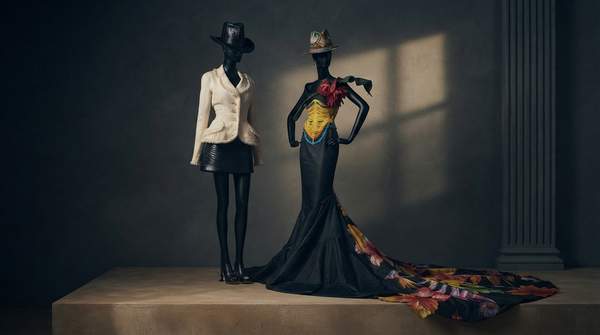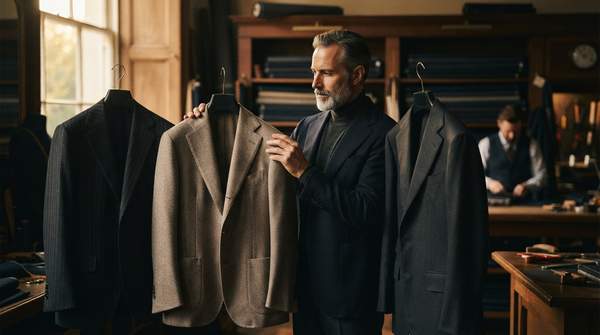
Bespoke tailoring is not a single craft but a family of regional philosophies, and the three most influential European traditions solve very different style problems. Savile Row asks how a garment can refine, strengthen, and formalize the body; Naples asks how it can move with the body while still looking elegant; Paris, as exemplified by houses like Cifonelli, fuses Savile Row structure with continental comfort and flair. Choosing among them is not a matter of pedigree but of matching construction to your formality needs, climate, and intended silhouette—and a hybrid commission can combine elements of more than one school.
Every tailoring tradition begins with a philosophy, as H.M. Cole's custom tailoring guide puts it: the two great schools "both produce beautiful suits, but they solve different style problems." That framing is the most useful lens for a prospective client. The question is not which tradition is best, but which problem you need solved—authority, ease, or a synthesis of the two—because each school's construction details follow directly from its founding intent.
The Foundations of Bespoke: Savile Row's Structured Authority
The English tradition, refined over roughly two centuries by the tailors of Savile Row, is built on the principle that the garment should hold you as much as you hold it. As the custom tailor Christian Boehm describes it, this is the tradition that dressed British aristocracy, military officers, and statesmen, and its military heritage survives in the vocabulary of the craft. When a client today chooses a hacking jacket or requests a structured shoulder, Boehm notes, he is reaching back through two centuries of tailoring history.
Its signature detail is the roped shoulder: a slightly raised, defined sleevehead that gives a jacket its distinctive architectural line. Savile Row tailors developed this detail as they refined the military influences that became permanent fixtures in the bespoke vocabulary. The overall silhouette is a more formal and commanding one, with a cleaner shoulder structure, a stronger chest line, and a polished, traditional character that the wearer feels as much as sees.
Practically, a heavily structured jacket performs best when the setting calls for polish, authority, and a traditional sense of elegance. H.M. Cole's guide recommends it for finance, law, politics, ceremonies, and formal business—contexts where the suit functions as a reliable professional uniform across years of wear. It is less the garment you reach for on a summer vacation or a relaxed dinner, and that limitation is by design: the structure that projects authority in a boardroom reads as stiffness at a seaside dinner.
The philosophy aims for a powerful visual message, and everything in the construction serves it. The padded shoulder and roped sleevehead create a strong horizontal line across the upper body; the disciplined chest keeps the front of the jacket smooth and formal. Choose this style when the goal is authority and structure, and when the occasions in your calendar reward a garment that reads as deliberate and enduring rather than effortless.