In a haute couture house, the première d'atelier is the pivotal figure standing between a designer's abstract vision and the finished garment. Far more than a "head seamstress," she coordinates and supervises the workshop's technical staff, takes clients' measurements for their custom mannequins, and participates directly in the construction of each made-to-measure piece — a definition formalized by the Comité Colbert, the association of French luxury houses, in its official description of couture métiers.
Defining the Première d'Atelier's Core Functions
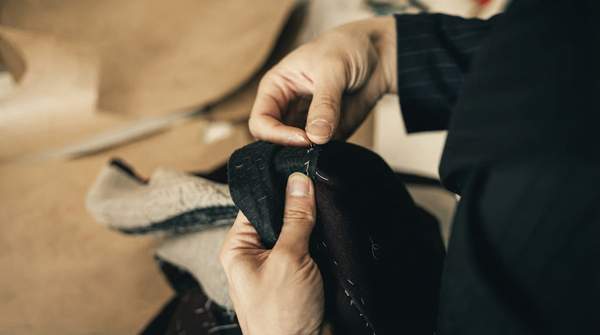
According to the Comité Colbert, the première d'atelier (or premier d'atelier, in the masculine) "coordonne et supervise le travail des modélistes et mécaniciens modèles" — coordinates and supervises the work of the patternmakers and model mechanics. In haute couture houses specifically, the role also includes taking clients' measurements to create their personal mannequin and participating in the realization of the made-to-measure garment. The definition therefore spans management, hands-on construction, and client-facing precision.
The scale of what this role manages is considerable. Reporting by Vogue Scandinavia on couture production notes that a single Chanel couture garment is handled by a team of four: one première and three seamstresses. Heavily embroidered one-of-a-kind gowns can require up to ten fittings, while simpler garments adapted from runway models may need only two and take six to eight weeks to deliver. The première is the person through whom this entire effort is organized.
The interpretive dimension of the work is captured most vividly by Josette Peltier, première d'atelier tailleur for Maison Chanel, in an interview published by the Fédération de la Haute Couture et de la Mode. Describing her work with Virginie Viard, she explained: "you have to listen to a gesture, a look. In haute couture, silences are listened to." Reading a designer's intent from non-verbal cues is, in her account, part of the job itself.
The Première d'Atelier's Functional Framework
To understand how these duties interlock, the première's responsibilities can be organized into three functional domains drawn from the evidence: interpreting the design, executing and supervising construction, and coordinating the team. The framework below categorizes the specific tasks described by the Comité Colbert, the FHCM, and production reporting.
| Domain | What the Première Does | Evidence for the Responsibility |
|---|---|---|
| Creative Interpretation | Reads the designer's sketch and intent — including gestures and silences — and translates it into three-dimensional form, establishing the pattern. | Josette Peltier's account of working with Virginie Viard at Chanel, published by the FHCM; MOJEH's description of the première interpreting the sketch into three dimensions. |
| Technical Execution & Supervision | Takes clients' measurements to realize their mannequin and participates in the construction of the made-to-measure garment; supervises patternmakers and model mechanics. | The Comité Colbert's official definition of the métier. |
| Team Coordination | Manages the workshop team — for example, a Chanel team of one première and three seamstresses — to deliver each garment efficiently and to couture standards. | The Comité Colbert's supervisory definition; Vogue Scandinavia's reporting on Chanel team structure. |
The framework shows why the role cannot be reduced to sewing excellence alone: the première is simultaneously an interpreter of design, a technician, and a manager. Each domain depends on the others — a pattern cannot be established without interpreting the sketch, and a team cannot be directed without technical authority.
Hierarchy of the Haute Couture Atelier
Within the atelier, the première occupies a clearly defined middle position: below the creative director, whose vision she translates, and above the specialized hands who execute the work. Writing on the atelier system, SELVANE describes this structure as "a meticulously structured hierarchy, a carefully choreographed ballet of hands," with the petites mains — junior artisans, often apprentices — at its base, mastering fundamental techniques such as the perfect straight stitch and the precise handling of delicate fabrics.
The term petites mains, literally "small hands," designates the qualified seamstresses of couture; Vogue Scandinavia reports that only around 2,200 seamstresses worldwide are qualified to work on couture. The première directs this collective effort, serving as the direct link between the designer's concept and the hands-on execution below her.
MOJEH's account of atelier practice makes the première's interpretive authority within this chain explicit: she "interprets the designer's sketch into three dimensions, establishes the pattern, and passes it to a première main who makes the toile in unbleached cotton." Fittings then happen on that toile — the calico prototype with which every couture garment begins, in both types of atelier, before any final cloth is cut.
Specialized Ateliers: Flou and Tailleur
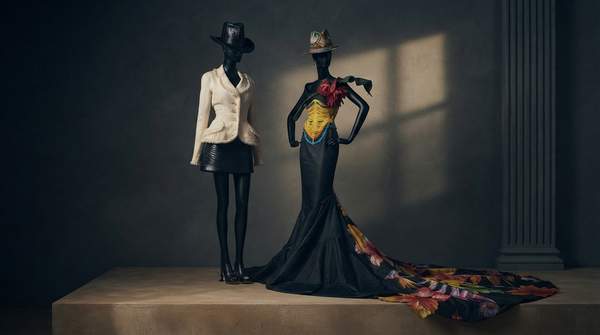
The première's expertise is itself specialized, because couture houses divide their workrooms into two distinct ateliers. The atelier flou handles soft, draped fabrics and fluid silhouettes — garments such as dresses and blouses demanding delicate construction and intricate finishes. The atelier tailleur builds structured tailoring: jackets, coats, and suits that require rigorous, precise construction techniques.
That this specialization reaches the level of the première's own title is confirmed by the FHCM's profile of Josette Peltier, who held the position of première d'atelier tailleur at Maison Chanel — a première of the tailoring atelier specifically. The inference from the evidence is that a première's technical mastery aligns with her atelier's category: draping and fluid fabrics for flou, structured construction for tailleur.
One caveat applies throughout: this profile reflects the traditional French haute couture context as described by industry bodies, and specific structures may vary by house. It is based on publicly available descriptions rather than any single house's proprietary internal processes.
Recognizing the Première d'Atelier's Indispensable Role
Readers should recognize the première d'atelier as an indispensable figure in haute couture, whose expertise is critical for translating abstract design into tangible, high-quality garments — a manager, technician, and interpreter in one role, positioned precisely where creative vision becomes physical reality. The measurable indicator of this role's continuing importance is the sustained presence and explicit recognition of the "première d'atelier" title and its defined responsibilities in official fashion industry communications — such as the Comité Colbert's métiers directory and the FHCM's profiles of named premières like Josette Peltier — and in the documented structures of the houses themselves.