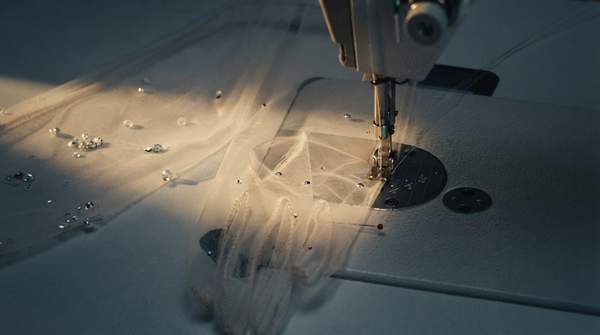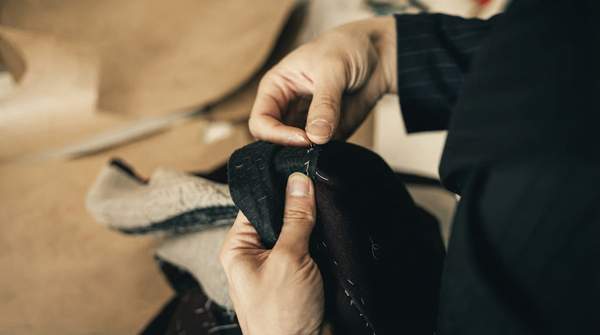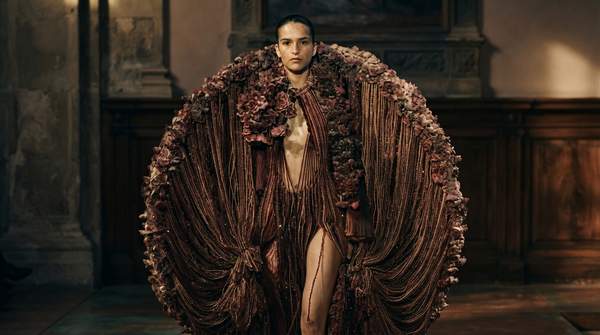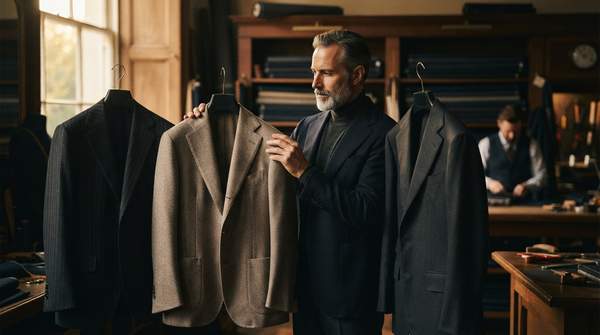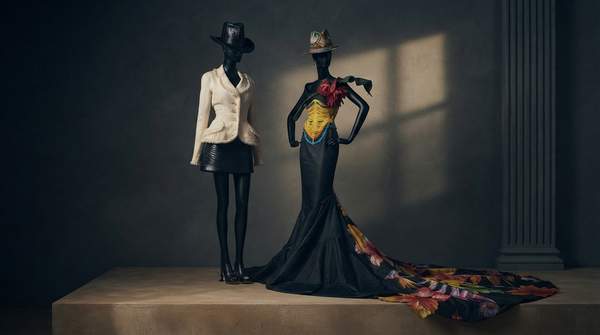
Haute couture's exclusivity rests on a specific production model: every house divides its workrooms by construction method, with a flou atelier for soft, draped garments and a tailleur atelier for structured tailoring, before the work passes to specialist artisans—les métiers d'art—for embellishments such as Luneville embroidery, featherwork, and hand beading. Understanding this division of labor, and the handcraft techniques it coordinates, is the key to explaining why a couture garment takes the time, and commands the rarity, that it does.
The Haute Couture Production Ecosystem
The clearest way to understand a couture house is to map who does what, and in what order. The model below classifies the two construction ateliers by garment focus, then situates the embellishment métiers that receive the work afterward. Coverage of the Autumn/Winter 2026 haute couture collections by A&E Magazine describes this structure at its most traditional: the atelier is divided "according to the way a garment is constructed," with the work then passing "through the hands of artisans whose métiers can be traced back generations."
| Function | Garment focus or task | Key techniques and responsibilities |
|---|---|---|
| Flou atelier | Soft, draped garments: dresses, softer silhouettes | Soft construction, draping, handling fluid fabrics |
| Tailleur atelier | Structured pieces: jackets, coats, suits | Precise tailoring and structured construction |
| Embellishment métiers | Surface decoration applied to garments from either atelier | Luneville embroidery, hand beading, featherwork application, hand-embroidered lace |
The two construction ateliers are parallel rather than sequential: a single collection sends its dresses to flou and its suits to tailleur, and both begin every garment the same way—as a calico toile, a test garment in unbleached cotton, rather than in the final cloth. Embellishment métiers, by contrast, enter the process later, decorating surfaces whose structure has already been resolved. This is the ecosystem's central logic: structure first, by construction specialists; decoration second, by ornamentation specialists.
The Dual Pillars: Flou and Tailleur Ateliers
The flou atelier specializes in softer silhouettes, draping, and dresses, working with fabrics that must fall, gather, and move against the body. The tailleur atelier focuses on structured pieces such as jackets, coats, and suits, where precision and internal architecture govern the garment's shape. As A&E Magazine's account of the métiers puts it, this division follows construction itself—tailleur for structured tailoring, flou for softer silhouettes—so the two workrooms embody fundamentally different technical disciplines rather than merely different garment types.
Within each atelier, a strict hierarchy of hands governs the sequence from sketch to garment. Writing for MOJEH, the magazine's editorial team describes how a première d'atelier interprets the designer's sketch into three dimensions and establishes the pattern, then passes it to a première main, who makes the toile in unbleached cotton. Fittings happen on that toile, not on the final fabric, which allows the silhouette to be corrected and personalized before precious materials are ever cut. This iterative stage is what makes couture genuinely made-to-measure: the toile absorbs the adjustments, and only then does construction proceed in the final cloth.
The distinction matters aesthetically as well as organizationally. A gown that appears weightless may in fact conceal rigorous construction—corseted waists, sheer draping, hand-embroidered lace, and sharply controlled proportions, in the description of one recent collection's gowns by A&E Magazine. That balance, between the flou's softness and the tailleur's discipline, is negotiated across the ateliers rather than solved within a single workroom, and it is one reason houses maintain both teams under one roof.