Haute couture garments represent the pinnacle of fashion artistry, distinguished by their exceptional craftsmanship and bespoke nature. At the heart of this exclusivity lie three foundational techniques: draping, hand embroidery, and bespoke pattern making. These methods are not merely construction processes; they are integral to the aesthetic and structural integrity of high fashion, preserving traditional skills while enabling designers to realize innovative visions. Understanding the unique historical context, meticulous execution, and distinct aesthetic contributions of each technique is essential to appreciating the profound complexity and artistry embedded in every haute couture creation.
Each technique plays a critical role in transforming raw materials into wearable art. Draping sculpts fabric directly on the form, creating fluid and organic silhouettes. Hand embroidery elevates garments with intricate, personalized embellishments. Bespoke pattern making ensures an impeccable fit tailored precisely to the individual. Together, these practices underscore the dedication to perfection that sets haute couture apart from ready-to-wear fashion, making each piece a testament to unparalleled skill and artistic expression.
Draping: Sculpting Fabric on the Form
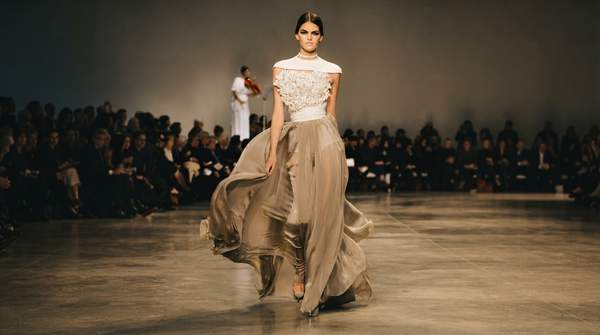
Draping is a foundational pattern-making technique in haute couture, distinguished by its hands-on, fully customized approach to shaping fabric directly on a dress form. This method allows designers to visualize and create garments in three dimensions, making it particularly effective for exploring complex shapes, fluidity, and asymmetry, as highlighted by RMCAD. It is often employed in conjunction with flat pattern drafting, especially for designs that demand intricate curves, organic forms, and natural drapes, according to ModaHow.
The execution of draping requires a profound understanding of fabric behavior and exceptional spatial awareness. Artisans manipulate fabric on a mannequin, pinning and cutting it to achieve the desired shape and flow, a process that is both highly visual and tactile. For instance, The Cutting Class observed how Hervé Léger's Spring-Summer 2013 couture collection utilized jersey, carefully draped over the body's curves and often supported by an internal lining, which was then shaped to match the finished drape. This technique allows for remarkable flexibility, enabling designers to easily modify the form and proportions of a garment, thereby quickly translating creative visions into tangible designs. The initial pattern is typically made from white cotton muslin, known as "toile" in French, directly on the right side of the dress form, a practice that is cost-effective and central to Parisian luxury ateliers.