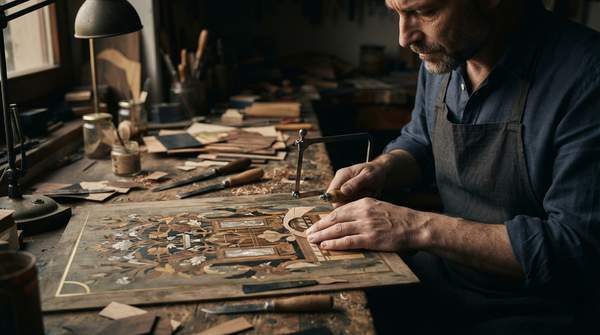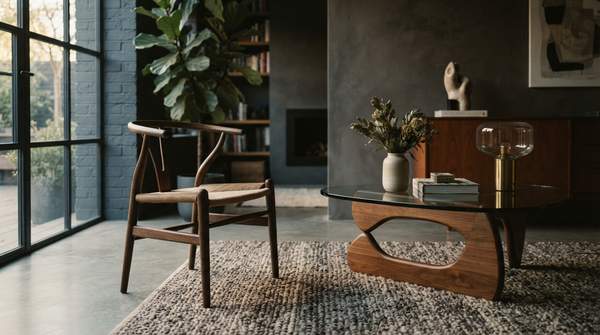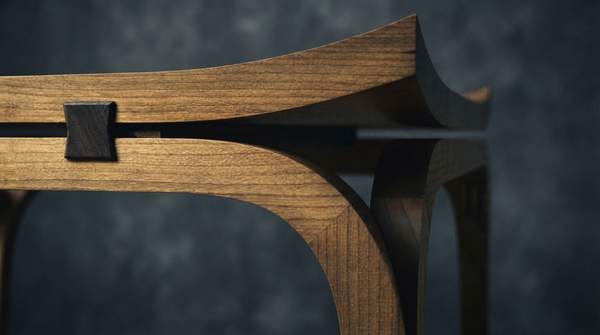
Japanese joinery builds furniture entirely from interlocking wood—no nails, no screws—and the results are durable, repairable, and visually clean enough to sit comfortably in modernist interiors. The craft, known as sashimono, relies on precisely cut joints whose geometry, not metal hardware, does the structural work. Understanding a handful of key joints—mortise and tenon, dovetail, and kumiki—explains both why these pieces hold together and why designers choose one joint over another.
The Enduring Principles of Japanese Joinery
The core principle is simple to state and demanding to execute: wood joins wood through precisely fitted geometry. Writing for the BYU Design Review, manufacturing engineer Andrew Cousins describes sashimono work as made "exclusively of wood and completely devoid of fasteners," with masters producing pieces that "can last for decades." A 2025 study by Oprea-Adrian Spanu and Emilia Adela Salca in the journal MAMAD frames the same idea from the design side: Japanese wood products are "uniquely crafted without nails or screws, relying on precise joinery for durability."
What distinguishes this from Western fastened construction is where the strength lives. In a screwed joint, the metal hardware resists the forces; in a sashimono joint, the shape of the cut itself resists them. That places an extraordinary premium on the accuracy of the cut, and it is why the technique is treated as much as a discipline of measurement as one of assembly.
Why Go Fastener-Free? Benefits for Modern Furniture
The advantages are practical as much as philosophical. Furniture maker Erik Needham, writing about contemporary applications, points to three: environmental sustainability, since eliminating metal fasteners yields a product whose materials are entirely biodegradable; repairability, because joints built this way can be disassembled and reassembled for repairs and updates without damage; and a timeless aesthetic in which the natural beauty of wood complements varied interior styles.
A design thesis from Politecnico di Milano on traditional Japanese joints extends the repair argument into a critique of modern manufacturing: much contemporary furniture uses external fasteners that are permanent after installation, so pieces are disposed of when only one part breaks. Ancient joints, by contrast, allow a broken component to be replaced. Plyroom's Elise Heslop makes the case bluntly from the workshop: these methods are "proven to be a better way of holding wood together," which is why her company uses wooden dowels rather than metal nails or screws.