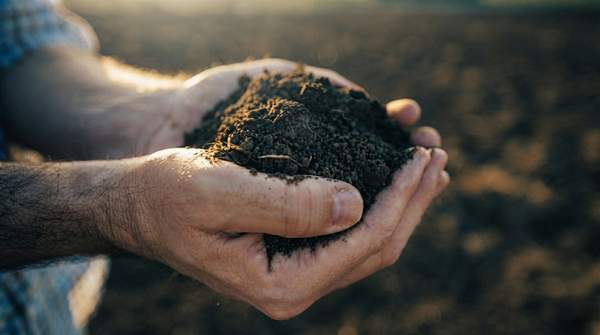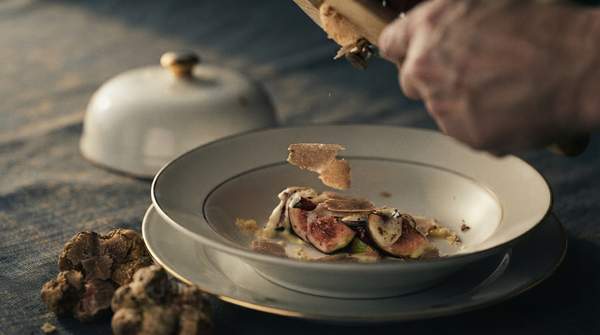
Truffles are expensive not because of marketing mystique alone, but because they are the fruiting bodies of fungi that cannot simply be planted like a row crop. A truffle is the reproductive structure of a subterranean fungus that lives in a symbiotic marriage with the roots of specific host trees, and it will only form when soil chemistry, host species, and climate align within narrow bounds. Understanding that biology — the mycorrhizal partnership, the precise pH windows, and the fleeting freshness of the harvested truffle — explains both the rarity and the price tag that follows these fungi from the orchard floor to the Michelin-starred plate.
The Symbiotic Science of Truffle Growth
The truffle begins its life not as a seed but as a fungal colony entangled with the roots of a tree. As Dr. Alexander Urban of the University of Vienna's Department of Systematic Evolutionary Botany explained at a science-based truffle cultivation seminar, the Périgord black truffle is "the product of a symbiotic marriage between a subterranean mushroom and the roots of a tree." The truffle itself, he noted, is the fruiting body of that fungal colony, and it usually grows beneath the drip line of the outermost branches of hazels and oaks — the zone where the tree's fine roots are most active.
This partnership is mycorrhizal: the fungus colonizes the tree's roots and exchanges nutrients and water harvested from the soil for the sugars the tree produces through photosynthesis. Neither party can produce the truffle alone. The grower therefore does not cultivate a fungus so much as cultivate a relationship, which is why orchard practice centers on the tree rather than the truffle. North Carolina State Extension's truffle research program describes the process plainly: the roots of tree seedlings are inoculated with the fungus, and the young trees are then planted out in an orchard, where the fungus and tree must establish and maintain their association underground.
The truffle only appears at the end of this long negotiation. When conditions are right, the fungal colony channels its energy into a fruiting body that develops entirely below ground. That subterranean habit is itself an evolutionary strategy: as the cultivation guide from the Spanish producer Micofora explains, truffles fruit into the soil and become aromatic precisely so that animals will dig them up, eat them, and disperse their spores. Humans exploit that same aroma — and dogs, which can be trained to recognize it, have become the harvesting instrument of choice, sniffing out ripe truffles without damaging them.
Even the visible signs of cultivation are indirect. Growers read the orchard through the tree and the soil, waiting years for the underground colony to mature enough to fruit. The fungus gives no above-ground crop to inspect; every stage of value creation, from colonization to fruiting, happens out of sight.