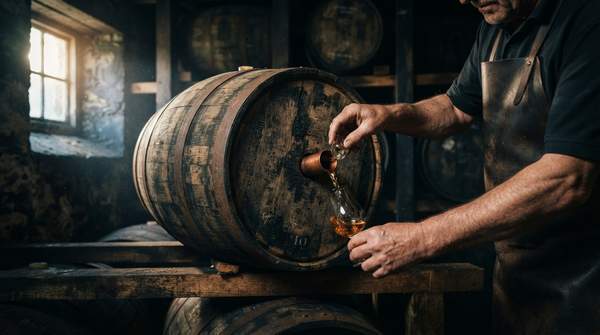
Every dram you pour carries the fingerprints of its cask, and those fingerprints come from two distinct sources: the species of oak the barrel was built from, and whatever liquid the barrel held before the whiskey ever entered it. Once you learn to separate those two influences—one structural, one residual—you can read a cask description on almost any bottle and anticipate roughly what awaits in the glass. Below, I unpack both mechanisms, then use Madeira cask finishing as a worked example, because it shows precisely how a previous occupant of the wood reshapes a mature spirit.
The Dual Influence of Casks on Spirit Flavor
Maturation is not a passive storage period; it is a slow chemical conversation between spirit and wood. The Scotch Malt Whisky Society notes that everything from the species of oak a cask was made from, to the cask's prior contents—wine, sherry, bourbon—to the size of the vessel itself leaves a significant impact on the whisky's profile. That observation is the foundation of the framework this article builds: whenever you taste something in a cask-aged spirit, ask whether it came from the wood itself or from the liquid the wood absorbed earlier. The two mechanisms work in tandem, which is why the same new-make spirit can emerge from two different casks tasting quite different.
Wood Type: The Foundation of Flavor
The first mechanism operates whether a barrel is brand new or has been filled a dozen times: the wood itself contributes flavor directly to the spirit. Oak typically imparts notes of vanilla, caramel, and spice during maturation, and different oak species push that base profile in different directions. This is where cask choice becomes an act of flavor design rather than mere containment. The variation among species is striking—American white oak reads as vanilla-forward and sweet, with caramel and coconut notes, while Japanese Mizunara oak, which the cooperage trade regards as one of the rarest and most prestigious barrel woods, is known for the distinctive aromatics of sandalwood, coconut, and incense. The wood species, in other words, is the spirit's underlying grammar.
Previous Contents: The Art of Cask Finishing
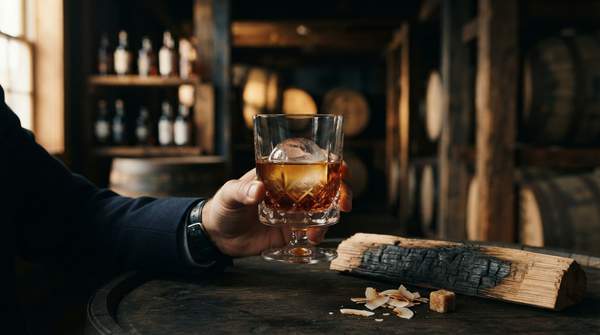
The second mechanism is the residue a cask carries from its former tenant. Whiskey that undergoes a secondary aging period in a barrel that previously held wine, sherry, rum, or port is called a finished whiskey, and the goal of that finishing process, as Lost Lantern Whiskey explains, is to impart new flavors, aromas, and complexity that the original oak maturation could not achieve. How much of that residual character the spirit absorbs depends on three factors identified in whisky writer Christopher Deutsch's cask guide: the length of the finish, how active the wood still is, and how much of the previous liquid remains soaked into the staves.
First-fill casks are the most flavor-active because they still carry significant absorbed compounds; second- and third-fill casks are gentler, since much of that material has already been extracted. The same whisky finished in different cask types can taste quite different as a result.