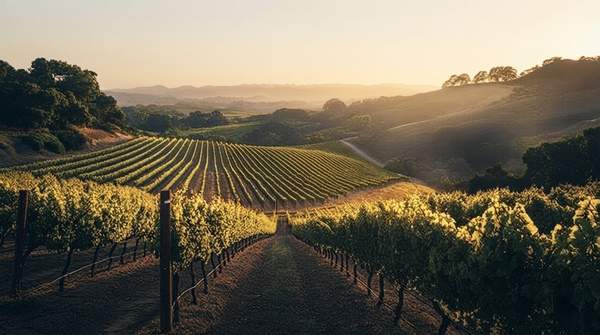
Grand Cru wines command their prices not because of marketing but because of where, exactly, the vines stand. In Burgundy, a Grand Cru vineyard may be distinguished from a neighboring plot simply by its mid-slope position, according to the wine investment specialist Alexander Westgarth, writing for WineCap; in Bordeaux's Médoc, deep gravel soils drain excess water while retaining warmth, suiting Cabernet Sauvignon and giving wines the structure to evolve over many years, as the wine merchant Corney & Barrow explains. Terroir—the interaction of soil, climate, and topography—is thus both the engine of a wine's character and the foundation of its investment case.
Introduction: Decoding Terroir's Influence
Terroir is best understood as a layered system rather than a single ingredient. Westgarth's guide for WineCap breaks climate into three geographical scales: the overarching climate of an entire region (like Burgundy's continental weather or Bordeaux's maritime influence); the specific atmospheric conditions of a sub-region or village; and the unique conditions within a single vineyard, or even a specific row of vines. These layers interact to create the conditions that dictate a wine's potential.
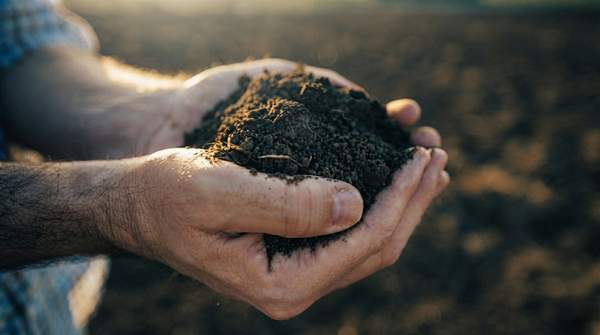
Beneath the atmosphere lies the literal bedrock. Old World producers frequently point to geology and soil as the foundation of their success, WineCap notes, because the underlying materials determine the nature of the topsoil and influence the local topography. A scientific review published in OENO One reinforces this agronomic view: the timing of grape ripeness is mainly driven by air temperature but is also impacted by soil temperature, slope, and aspect. In other words, the land is not scenery—it is a working mechanism that controls how the vine ripens its fruit, and therefore what ends up in the glass.
Soil: The Foundation of Grand Cru Character
The two most celebrated Grand Cru red-wine terroirs in France rest on radically different geology. Burgundy's vineyards grow in a complex combination of limestone and clay in marly soils, while the Médoc is built on deep, stony-gravelly sands that provide excellent drainage, according to WineCap's regional summary. These are not incidental differences in texture; they change how water moves, how heat is stored, and how the vine behaves over a growing season.
Gravel, the signature soil of the Médoc, works through a double mechanism. As Corney & Barrow describes it, gravel allows excess water to drain away while retaining warmth during the growing season. The practical consequence is that the vine's roots avoid waterlogging in wet periods, while the stored heat helps the fruit continue ripening through cool nights and into autumn—conditions that suit Cabernet Sauvignon particularly well. The Graves district south of Bordeaux is even named after the gravel and smooth pebbles the Garonne river deposited, a reminder that in this region the soil is the identity.
Burgundy's marl operates differently. A blend of limestone and clay, it is the medium in which Pinot Noir achieves the finesse for which the Côte d'Or is famous. The specific composition of limestone and marl varies across the slope, influencing drainage and nutrient availability, which is one reason adjacent parcels can produce wines of noticeably different weight and perfume.