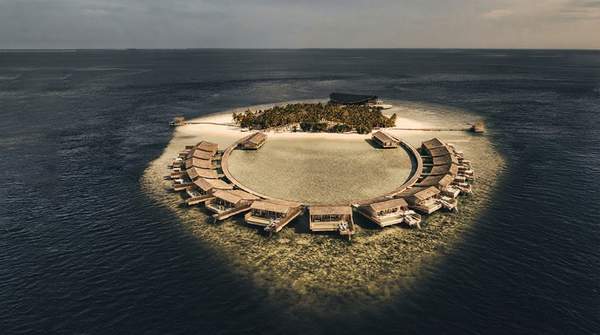
The most reliable measure of an ultra-exclusive remote destination is not its price tag or its distance from an airport. It is a set of concrete, verifiable criteria: a strict cap on guest numbers, a high staff-to-guest ratio, and a setting that could not exist anywhere else. This guide distills those benchmarks—drawn from specialist luxury travel advisors and industry rankings—into a decision framework you can apply to any property on your shortlist, rather than a ranking of specific destinations.
Beyond Traditional Luxury: The Evolving Demands of Elite Travel
Affluent travelers are moving past five-star resorts with crowded pools in search of something rarer: genuine privacy, untouched environments, and service so personalized it feels designed for one, as the specialist agency Hidden Door Travel frames the current market. The difficulty, that agency notes, is distinguishing destinations that actually deliver seclusion from those that simply market it.
The industry data points the same direction. Virtuoso's 2026 Luxe Report placed crowd control first among the year's five luxury travel trends, while Venice charged 723,497 day visitors an access fee in 2025—a signal of how strained the world's most beloved places have become. Meanwhile, Lodging Econometrics forecasts roughly 2,742 new hotel openings worldwide in 2026, more than seven a day. "Service can be trained. Design can be commissioned. Privacy can be bought. Distance can only be found," said Emma Ponsonby, co-founder and CEO of Satopia, whose organization publishes a ranking of remote properties.
What elite travelers now want is also more personal. Luxury advisors report demand for experiences built around precise purposes—special celebrations, a family's educational interests, hands-on workshops crafted to individual passions—rather than standard amenities. Black Tomato, a luxury travel designer, describes its clients' priority as "escaping the crowds and getting beneath the surface of a place."
Defining True Exclusivity: Key Metrics for Remote Destinations
Hidden Door Travel identifies four pillars that define a true luxury remote retreat: strict capacity limits, high staff-to-guest ratios, unique natural settings, and seamless arrival logistics. Two of these are quantifiable and can be verified before booking; two are qualitative but equally testable. The framework below applies each criterion against the benchmarks the agency and the Satopia ranking establish, so you can score any candidate property rather than rely on marketing language.