Verifying a luxury purchase comes down to three escalating layers of evidence: the paperwork that traces an item's origin and ownership, the digital records that follow it through the supply chain, and the scientific tests that can tie its very materials to a place and process. A collector who works through these tiers in order—documents first, technology second, laboratory analysis last—can assess both whether an item is genuine and whether it was responsibly made. The framework below is a guide to due diligence, not a substitute for professional appraisal on rare or extremely high-value pieces.
Introduction: The Quest for Authentic and Ethical Luxury
Provenance is what separates an acquisition that lasts from an expensive mistake. Kevin O'Gara, writing for Kevin Francis Design, defines provenance value as the measurable and emotional premium that comes from knowing exactly who made an object, where, how, and for whom—a verifiable chain of origin that turns a beautiful piece into an investable, insurable, story-rich asset. That chain matters doubly today, because a luxury item is the product of decisions made across dozens of suppliers, manufacturers, and logistics partners, as the Oscar and Mila buyer's guide explains: a single disruption anywhere in that chain ripples into final quality. The same transparency that confirms authenticity also reveals whether materials were sourced ethically, which is why the two questions are best answered together.
Tier 1: Documentary Proof – The Paper Trail of Provenance
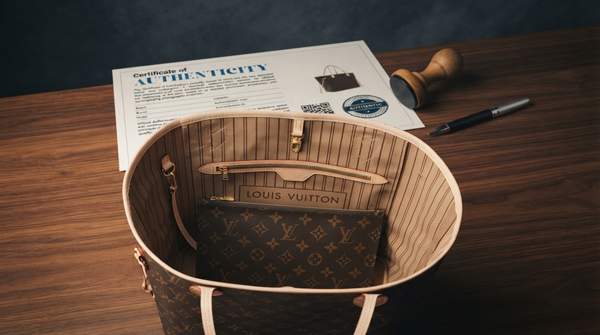
The first tier costs nothing but attention. O'Gara recommends starting directly with the maker: ask for workshop contact details, process images with visible date stamps, and a signed certificate of authenticity on studio letterhead. Request the original invoice and confirm the maker's name appears consistently across both documents—mismatches are an immediate red flag. For bespoke commissions, he notes that a genuinely handmade piece will show subtle variation across its surface, such as slight irregularities in pile height or minor color shifts in hand-dyed wool, that factory production cannot replicate. Third-party verification adds another layer: an independent appraiser's condition report, cross-referenced against auction catalogues or maker registries, confirms the documentation package is internally consistent. The limits are real, though—this tier relies entirely on the integrity and availability of the documents themselves.
Tier 2: Technological Traceability – Modern Tools for Transparency
Where paper can be forged or lost, digital records aim to be tamper-proof. Blockchain technology offers a decentralized platform for recording and verifying transactions, and luxury brands can use it to create a digital ledger capturing every step from raw material sourcing to finished product. Traceability firms describe how a luxury watch brand, for instance, can use blockchain to verify the authenticity of its timepieces by recording their components, manufacturing processes, and certifications. A newer development is the Digital Product Passport: NFC (near-field communication) tags assign each item a unique, tamper-proof ID linked to information such as original price, material composition, and dye processes. The critical caveat is adoption.
These systems only work where the brand has implemented them robustly, and their use across the luxury sector is still developing—so a missing digital record is not itself evidence of a fake, while a present one should be checked against the physical item.
Tier 3: Scientific Analysis – Unveiling Hidden Truths
When documents raise doubts or the value justifies certainty, science offers the strongest answer. For high-value textiles, O'Gara writes, isotopic or spectrometric testing can link fibers to a specific geographic source, making origin claims essentially impossible to falsify. This level of authentication is increasingly available and worth commissioning when a piece carries significant value or when doubt exists about material sourcing. It is typically reserved for such pieces because of its specialized nature and cost, and its applicability depends on the item's materials and the specific test required. Scientific testing of fibers or pigments, as O'Gara summarizes, provides the highest level of certainty available to a collector.
Luxury Verification Framework: A Collector's Checklist
The three tiers are designed to be applied in sequence, escalating as value and uncertainty rise. Use this matrix to work through a potential purchase systematically: begin with the documentary row, move to technological checks if the brand supports them, and reserve scientific testing for items where the stakes justify it. The purpose column tells you what each tier establishes; the qualification column tells you when its evidence runs out.
| Verification Method | What to Check | Purpose | Applicable To / Limits |
|---|---|---|---|
| Documentary Proof | Original invoices, signed certificate of authenticity on studio letterhead, workshop contact details, process images with date stamps; consistent maker's name across all documents | Establishes a foundational paper trail for the item's origin and ownership history | All categories; limited by the availability and verifiable nature of the documents, and relies on their integrity and consistency |
| Technological Traceability | Digital Product Passports and NFC tags; blockchain ledgers recording components, manufacturing processes, and certifications | Provides transparency from raw materials to consumer, verifying both authenticity and ethical sourcing claims | Items from brands that have adopted these systems; effectiveness depends on brand adoption and robust implementation, and widespread use is still developing |
| Scientific Analysis | Isotopic or spectrometric testing of fibers or pigments to link materials to a specific geographic source | Offers a virtually unfalsifiable confirmation of material origin and authenticity when doubt exists | High-value textiles and pieces of significant value; availability varies by material and test required |
| Supply Chain Transparency | Whether the brand openly shares where materials come from, who made the piece, and how it reached you | Signals a brand's commitment to ethical sourcing and quality, connecting authenticity to responsible practices | Any brand, researched with these methods; transparency levels vary, so look for actively verifiable details rather than accepting silence |
The escalation logic is straightforward: a document check that passes but leaves questions open moves to tier two; a brand with no digital traceability shifts the burden back to documents and, for high-value items, to tier three. Inconsistency at any tier is the signal to stop and seek professional appraisal.
Supply Chain Transparency: The Cornerstone of Ethical Sourcing and Authenticity
Transparency is the thread that ties authenticity to ethics. As the Oscar and Mila guide puts it, buyers increasingly understand that transparency about where materials come from, who made the piece, and how it reached them signals a brand that has nothing to hide. SELVANE's editorial team argues that ethical sourcing extends far beyond the assurances of a simple certification: while third-party audits provide a baseline, they often fall short of capturing a supply chain's full impact, and true ethical sourcing combines technological innovation, fair compensation, and a transparent relationship with consumers.
A sourcing checklist from dorsali.com frames the same standard from the producer side—fair wages, safe working conditions, responsible resource use, and honest communication about sourcing practices. Traceability systems also let brands assess the environmental impact of their raw material sourcing by identifying suppliers who follow sustainable practices, and demonstrate compliance with ethical standards. For the collector, the practical translation is simple: a brand that answers these questions with verifiable detail is easier to authenticate, and a brand that will not answer them is harder to trust on either count.
Your Confident Path to Collecting
Collectors should adopt a systematic, multi-tiered verification process for luxury goods, starting with documentary checks and escalating to technological and scientific methods as needed, to confidently assess authenticity and ethical provenance. The framework is a synthesis of available methods, and its effectiveness depends on the specific item, the brand's adoption of technology, and the collector's own diligence; it does not replace professional appraisal for extremely high-value or rare pieces, and it is not legal advice on counterfeits or import rules. Nor does it rank brands—it equips you to research any brand.
The measurable indicator of success is this: the collector successfully identifies verifiable documents, digital traceability records, or scientific test results that align with the item's claimed provenance, or identifies inconsistencies that warrant further investigation or professional appraisal. When the evidence and the claim align at every tier you can reach, buy with confidence; when they diverge, the divergence itself is your answer.
Sources
- Provenance Value in Luxury Goods: A Designer's Guide — Kevin Francis Design
- Supply Chain Impacts on Luxury Goods: A Buyer's Guide — Oscar and Mila
- Authena
- Ethical Luxury Sourcing: Beyond Certifications — SELVANE
- Checklist for Ethical Material Sourcing — Dorsali