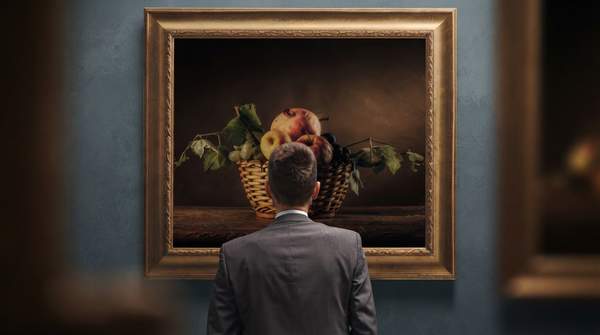
The difference between a home that is decorated and a home that is curated is a decision process, not a budget. For a high-net-worth collector, placing valuable art in a residence requires weighing four factors together: the narrative the collection tells, the architecture it inhabits, the interior it must live with, and the environmental conditions that will keep it intact. This guide sets out that framework and the conservation practices that protect the asset behind it.
Beyond Decoration: The Curatorial Mindset for Luxury Homes
Interior design is about how a room looks; curation, as the art advisor Arushi Kapoor of The Agency Art House puts it, is about "how a home thinks." In her framing, the era of "matching the art to the sofa" is over: a high-end residence is a "living archive," and the distinction between a space that has been decorated and one that has been curated is immediate—one feels like a showroom, the other like a legacy.
Curation, as a discipline, is a deliberate process of research, spatial reasoning, and narrative construction rather than the selection of preferred artworks, according to the contemporary artist Eman Khalifa's practical guide for collectors and designers. It demands detailed space assessment, thematic development, sourcing, and installation management. Kapoor's advisory practice similarly treats art not as a finishing touch but as a foundational pillar of the residence, with the strongest collectors integrating art into a home so that the house and the collection elevate one another.
The practical consequence for the homeowner is a shift in the unit of decision. The question is not "what looks good above the fireplace" but "what does this placement say, and can this room sustain it." That reframing is what separates a collection from a set of purchases.
The Curation Checklist: A Framework for Art Placement
The checklist below converts those principles into a repeatable evaluation. For any candidate placement, work through the four factors in order; a placement that fails on preservation is disqualified regardless of its aesthetic strength, because irreversible environmental damage cannot be undone by good taste.
| Factor | Question to ask | What it rules in or out |
|---|---|---|
| Curatorial narrative | What does this piece contribute to the collection's story in this location? | Whether the placement advances a coherent theme or biography, per Khalifa's account of curation as narrative construction. |
| Architectural synergy | Does the piece define or support the room's architectural intent? | Whether art acts as a foundational element of the architecture rather than a decorative layer, as Kapoor argues. |
| Interior harmony | Does the work sit comfortably with the room's design without being subordinate to it? | Whether the placement integrates with the interior rather than merely matching it. |
| Preservation requirements | Can this room hold stable temperature, humidity, and light exposure for this medium? | Whether the environment is safe; if not, the placement fails regardless of aesthetics. |
Use the checklist as a sequence, not a scorecard. A work on paper with high light sensitivity may be beautiful in a glass-walled great room, but the preservation factor vetoes the placement; the piece belongs in a controlled, low-light location, and the narrative and harmony factors should then be re-evaluated for that alternative location.
Curatorial Narrative: Telling Your Collection's Story
A collection earns the name when the pieces speak to one another. Khalifa's guide emphasizes that building a valued collection depends on patience, storytelling, and authentic interest: the collector's own biography and intellectual identity should drive what is acquired and where it lives. Kapoor describes this as art serving as a bridge between the architectural bones of a home and the collector's identity, rather than a secondary decorative element.
In practice, narrative placement means sequencing. Decide which rooms carry which chapters: a formal entry may carry the strongest statement pieces that define the home's architectural intent, while quieter, more personal works belong in private rooms where they reward close viewing. When a new acquisition arrives, ask first which room's story it extends, and only then which wall it fits.
Architectural Synergy and Interior Harmony
Kapoor's advisory writing argues that treating art as integral to architecture from the outset is where collectors gain the most; viewing art as a layer applied after the interior is complete is, in her words, a missed opportunity. A masterpiece changes the energy of a room and can define its architectural intent—scale, sightlines, and wall materiality should be planned around significant works, not around them.
For an existing home, the same logic runs in reverse: assess the architecture before the artwork. Tall ceilings and long sightlines favor large canvases; intimate rooms favor works that reward proximity. Interior harmony then operates below the architectural level—color, texture, and proportion—but the piece should never be reduced to a match for the furnishings. If the only argument for a placement is that it complements the upholstery, the placement is decorative, not curatorial.
The Conservation Mindset: Protecting Your Art Assets
Kapoor calls the operational side of collecting—climate-controlled shipping, white-glove installation, insurance, and documentation—the "unsexy" territory where the most value is protected. The Conservation Center for Art & Historic Artifacts warns that light damage is cumulative and irreversible, extending beyond fading to weakening, discoloration, yellowing, and embrittlement, with the damage determined by light intensity and type, exposure time, and the object's natural resistance. Exposure should be controlled, monitored, and recorded, with illuminance for light-sensitive materials tracked as light level multiplied by time.
Climate is equally unforgiving. Conservation & Design International states that control of temperature and relative humidity is critical for all artwork, because unacceptable levels significantly degrade art materials—and temperature fluctuations can condense humid air into liquid water on the work itself. Stability, not any single ideal number, is the governing principle; a microclimate, in the museum sense, means stable conditions within a small area such as an enclosure.
Documentation completes the conservation mindset. Mercer Advisors recommends maintaining detailed records of provenance and title—bills of sale, gallery invoices, prior catalog entries, export and import paperwork, and loan or exhibition history—and requesting independent condition reports for meaningful purchases even when the seller provides one. Insurance is essential for any collection regardless of size, covering the carrying costs of storage, conservation, and maintenance alongside the works themselves.
Implementing Your Curatorial Vision: A Long-Term Commitment
Homeowners should adopt a continuous curatorial and conservation mindset, regularly assessing their collection's placement and environmental conditions to protect its aesthetic and asset value. The measurable indicator is a regular review of environmental control logs—temperature, humidity, and light levels—alongside documented condition reports for each artwork. Placement is not a one-time decision: a work that fails the preservation factor moves, and a room whose story has changed should be re-hung to match it.
This framework is for private residential collections, and it is not a substitute for professional consultation; major installations involving heavy works or structural mounting warrant a conservator or structural engineer, and significant acquisitions warrant an independent advisor. But the discipline itself—narrative, architecture, harmony, preservation, checked in that order—is one the homeowner can own from the first placement onward.
Sources
- Art Curated: a Practical Guide for Collectors and Designers — Eman Khalifa | Contemporary Artist
- Curating Art for a Luxury Home — The Agency Art House
- Best Art Advisors for High Net Worth — The Agency Art House
- Basic Guidelines for Preservation — Conservation & Design International
- Investing in Fine Art — Mercer Advisors