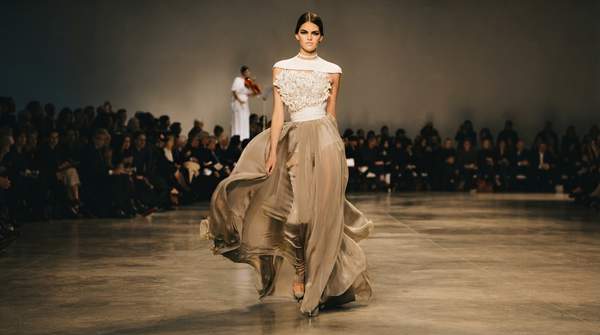
After a four-year hiatus, First Nations Fashion and Design (FNFD) did not merely return to Australian Fashion Week; they opened it. Their 'Reclamation' show, staged Sunday night in Sydney, featured six diverse Indigenous brands, asserting a powerful statement of cultural presence (The Guardian, SBS Australia, Harper's Bazaar Australia). This marked the official kickoff of Australian Fashion Week 2026, a significant reordering of priorities.
Indigenous fashion has historically been sidelined within the broader industry. Yet, the 'Reclamation' show now commanded the opening slot of Australian Fashion Week, directly challenging years of exclusion and demanding a re-evaluation of the industry's gatekeepers.
A sustained shift towards greater recognition and integration of First Nations creativity into the global fashion landscape is actively challenging established norms.
A Powerful Return to the Main Stage
First Nations designers Buluuy Mirri and Van Ermel Scherer opened Australian Fashion Week, presenting their work as part of the collective (ELLE Australia). This collective, 'Reclamation', showcased six Indigenous brands and designers, amplifying a diverse range of voices (The Guardian). The decision to feature a collective, rather than a single designer, asserts a broader cultural statement, actively counteracting past tokenistic inclusions and demanding a more comprehensive industry engagement.
Beyond the Runway: Cultural Statements
FNFD's 'Reclamation' show, positioned as the opening event, confirms Indigenous design's inherent power to convey profound cultural statements. This strategic placement transcends mere aesthetics; it establishes Indigenous fashion as a vital platform for cultural expression and global solidarity. The industry must now acknowledge these deeper narratives, recognizing their capacity to connect with broader societal movements.