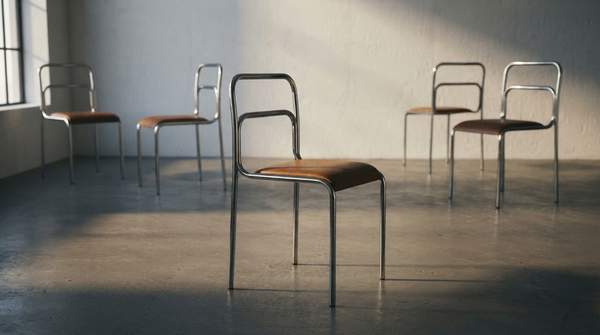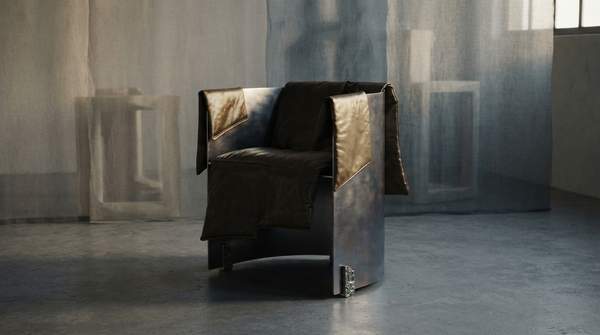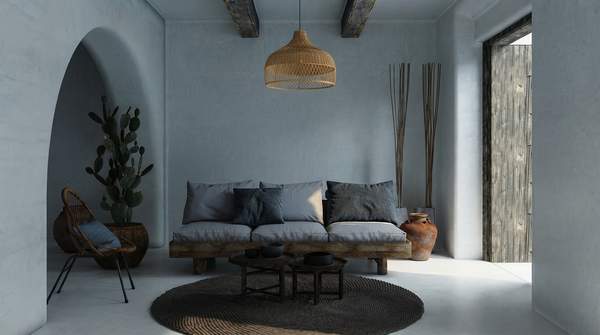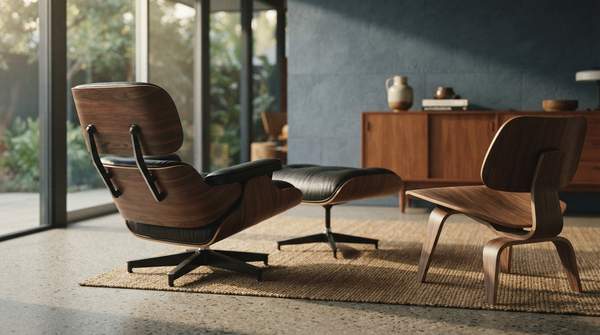
Modernist furniture endures because its forms were not styled into existence; they were engineered out of new materials. The movement's core principles—simplicity, functionality, and material honesty—found physical expression only when designers gained access to industrial materials like molded plywood and fiberglass, which made sculptural, stripped-down forms manufacturable rather than merely imaginable.
The Essence of Modernist Furniture Design
Before modernism, furniture was treated primarily as ornament, an attitude the movement deliberately rejected. Modernist design stripped away decorative elements to focus on the design of the object itself, aiming to save time, money, material, and labor while capturing what its proponents saw as timeless beauty in spare precision. The machine aesthetic encouraged factory modules that reflected the period's efficient, time-managing ideals.
Writers tracing the movement's evolution describe it as a revolution in how people think about living spaces: a rejection of "the frills and fuss of the past" in favor of simplicity, functionality, and sleek elegance. That framing captures the essential shift—the object's purpose, not its applied decoration, became the legitimate source of its beauty.
Form Follows Function: A Guiding Principle
The Deutscher Werkbund, founded in Munich in 1907 as an organization of artists, designers, and manufacturers, articulated the movement's shared convictions early: "form follows function," alongside commitments to quality, material honesty, functionality, and sustainability. These were not slogans but working constraints that shaped structural decisions. A chair designed under this principle begins with how a body sits, and every curve that survives must justify itself against that use.
The principle had a practical economic logic as well. Because modernist design could strip down decorative elements, it conserved material and labor—an efficiency that aligned the aesthetic with industrial production. The clean lines associated with the movement were thus simultaneously an ethical position about honesty and a manufacturing strategy.
Material Innovations: Shaping New Possibilities
Principles alone do not produce chairs; materials do. The mid-20th century, particularly the 1950s through 1970s, is when iconic designers embraced new materials like molded plywood and fiberglass, according to design-market analysis of the era's most collectible work. That period's emphasis on clean lines and functional beauty, guided by modernist principles, produced pieces that remain sought after by collectors worldwide.
The significance of these materials was technical, not merely fashionable. Fiberglass and plastic allowed designers to experiment with shapes and colors that traditional woodworking could not achieve, pushing the boundaries of conventional furniture construction. Molded plywood similarly enabled curved, continuous surfaces with structural integrity—forms impossible to carve economically from solid timber. The new materials did not simply decorate modernist ideas; they made previously impossible geometries manufacturable.
Modernist Principles & Material Innovations
The table below juxtaposes the movement's abstract principles against the material technologies and named designers that gave them physical form, making the causal chain from philosophy to object explicit.
| Design Principle | Material Innovation | Iconic Example | Resulting Form/Function |
|---|---|---|---|
| Form follows function; strip away ornament | Machine production and factory modules | Work of the Deutscher Werkbund circle, including Mies van der Rohe | Spare, precise objects that conserve material and labor while serving use |
| Simplicity, functionality, sleek elegance | Modernist construction methods | Gerrit Rietveld's furniture, evolving modernist ideas | Essential geometric forms with no applied decoration |
| Elegance balanced with functionality | Luxurious modern materials | Eileen Gray's Bibendum Chair and Adjustable Table E-1027 | Sleek modernist lines that remain practical in homes today |
| Sculptural, organic form | Fiberglass and plastic | Eero Saarinen's Tulip Chair | Smooth, single-form sculptural shape unachievable in wood |
| Clean lines and functional beauty | Molded plywood | Mid-century designer pieces of the 1950s–1970s | Curved surfaces with structural integrity; timeless collectible forms |
Read across the rows, the pattern is consistent: each principle became a physical reality only when a material could deliver it. Saarinen's Tulip Chair demonstrates the link most vividly—its fluid, continuous silhouette exists because fiberglass and plastic could be molded into a smooth, sculptural form, a shape the designer's stated aesthetic demanded but traditional joinery could not supply.
Iconic Designers and Their Material Masterpieces
Eero Saarinen's Tulip Chair is the clearest case of material enabling form: it used fiberglass and plastic to achieve its smooth, sculptural silhouette, and those new materials let designers of his generation experiment with shapes and colors beyond traditional furniture's reach. Eileen Gray, though Irish-born, made her mark on French modernism with pieces like the Bibendum Chair and the Adjustable Table E-1027, celebrated for balancing elegance and functionality; her style combined modernism's sleek lines with luxurious materials, distinguishing her from contemporaries. Gerrit Rietveld, alongside Piet Mondrian and Mies van der Rohe, continued to evolve modernist design ideas within the movement's early, austere mode.
What unites these figures is not a shared material but a shared method: each chose a material whose properties matched the form the function required. That matching, more than any signature style, is the modernist inheritance.
The Enduring Legacy of Modernist Furniture
The movement's longevity is measurable in the market and the home alike. Design-market commentary notes that mid-century pieces remain highly sought after by collectors worldwide, while accounts of French modernism observe that its blend of craftsmanship and innovation produced pieces that still look beautiful in homes today. Advances in upholstery techniques and new fabrics accompanied the structural materials, yielding furniture that was functional and visually striking.
The deeper legacy, however, is methodological. Modernism established that a form should be legible as the consequence of its material and its use—an assumption now so embedded in design education and practice that contemporary furniture rarely argues for ornament on its own terms. The movement's spare precision, once a radical economy, became the default grammar of good design.
Identifying Enduring Modernist Design
When evaluating furniture, look for pieces that embody simplicity, functionality, and material honesty, recognizing how innovative materials enabled their forms. The measurable indicator is the presence of clean lines, minimal ornamentation, and forms that clearly derive from the properties of materials like molded plywood or fiberglass. A chair whose curve could only have been molded, not carved, and whose every element answers its use, carries the movement's core logic—evidence you can verify in the object itself, no provenance required.
Sources
- The Evolution Of Modernist Furniture Design & Its Designers — The Shelfist.
- Modern furniture - Wikipedia — EN
- What Makes Furniture Designer? Expert Analysis — The Oblist