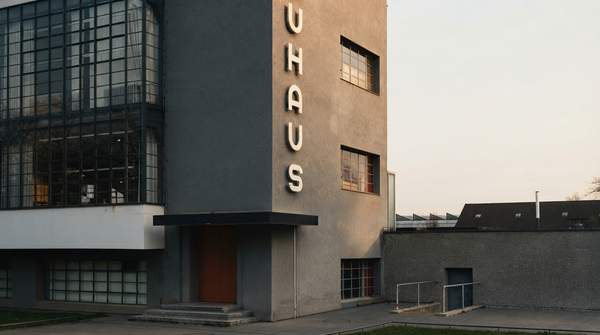
The clean, uncluttered sophistication of many contemporary high-end interiors is not an accident of taste; it descends from a coherent set of ideas. The Bauhaus school, founded by Walter Gropius, emphasized functionality over ornamentation, and its three load-bearing tenets—form follows function, minimalism, and the unity of art and technology through honest materials—still govern how luxury spaces are planned, furnished, and colored. Understanding these principles turns a vague impression of "modernism" into a readable design language.
Form Follows Function: The Core of Bauhaus Luxury
The foundational Bauhaus tenet, as design educators at the Interior Design Institute explain, is that a design's appearance should be dictated by its purpose, prioritizing usability and efficiency. In a luxury context, this means the elegance of a room begins with how well it works: a floor plan is judged by flow and efficiency before decoration, and a chair is judged by how it serves the body before it adorns the room.
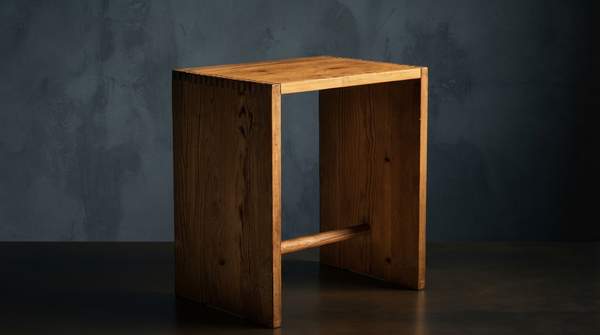
This inverts the traditional logic of opulence, where ornament signaled expense. Bauhaus-derived luxury locates sophistication in purposefulness—every element serves both an aesthetic and a practical role, a philosophy PAD Interior Design summarizes as "less is more." Furniture designed under this principle derives its beauty from utility and inherent material qualities rather than applied decoration, which is why a purposeful, well-proportioned piece can read as more refined than an ornate one.
Minimalism and Geometric Purity in High-End Interiors
Bauhaus minimalism strips away excess in favor of clean lines, geometric forms, and clarity of expression. Writing in Upscale Magazine, Carina Kümmeke notes that the style is characterized by geometric shapes—circles and rectangles dominating furniture and decor—paired with a deliberate avoidance of unnecessary decoration.
In high-end interiors, this restraint produces the serene yet striking atmosphere that distinguishes contemporary luxury from maximalist traditions. The absence of clutter directs attention to proportion, light, and the few objects that remain, each of which must justify its presence. The result is a sleekness that reads as confidence: the room does not need embellishment because its geometry and craftsmanship carry the composition. Minimalism here is not emptiness but edited intention.
Material Honesty: Industrial Elegance in Luxury Spaces
The Bauhaus embrace of modern industry—steel, glass, concrete, and plywood—was originally practical, but in luxury interiors these materials have become a vocabulary of refined industrial elegance. Nazmiyal Antique Rugs' architectural survey observes that the movement's adoption of industrial materials revolutionized construction and enabled forms impossible with traditional techniques.
What designers call material honesty means leaving these substances exposed to celebrate their raw texture and functional beauty, rather than disguising them behind applied finishes. PAD Interior Design notes that Bauhaus-inspired luxury relies on industrial materials such as glass, steel, and leather for a sleek modern aesthetic with durability and longevity—glass partitions enhance light and openness, while polished steel accents add sophistication. The luxury register comes not from rarity alone but from the quality of execution: precision joinery, flawless surfaces, and materials chosen for how they perform and age.
The Bauhaus Color Palette: Neutrality with Purposeful Accents
The characteristic Bauhaus scheme is a neutral foundation punctuated by primary color. Upscale Magazine describes monochromatic schemes with pops of red, blue, or yellow; PAD Interior Design frames the same palette as balancing timeless elegance with playful creativity, where neutral tones provide a calming backdrop and vibrant accents inject energy and personality.
The structure matters as much as the hues. Neutrals—whites, grays, and earth tones—do the architectural work, receding so that geometry and materials remain legible. Primary accents are then deployed sparingly and deliberately, often at a single focal point: a red chair, a yellow artwork, a blue textile. This discipline is what keeps the palette sophisticated rather than busy; the accent earns its place through contrast with restraint, creating what Kümmeke calls a balanced aesthetic harmony.
Spatial Planning: Openness and Flow in Modern Luxury
Bauhaus architects were among the pioneers of the open floor plan, an innovation that reshaped how interior spaces are organized and how people interact within them, and which continues to influence architectural design today, according to the Nazmiyal survey. Upscale Magazine identifies the contemporary expression: fluid, airy spaces that encourage seamless flow between areas, enhanced by multipurpose furniture that improves efficiency.
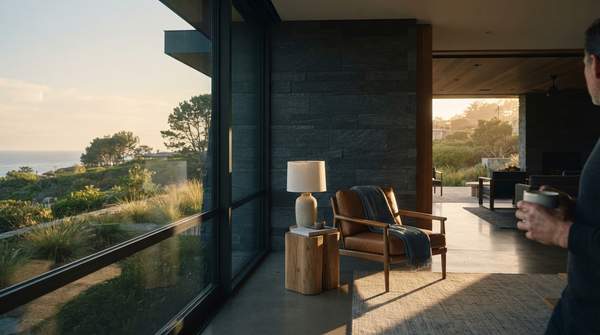
In luxury interiors, this openness serves a dual purpose. Practically, it supports the modern preference for interconnected living, dining, and kitchen zones. Aesthetically, it allows the minimalism and material honesty described above to register at the scale of the whole room rather than isolated objects—sightlines extend, light penetrates deeper, and each zone remains visually accountable to the next. Every element, as the Bauhaus rationality demanded, has a purpose and contributes to the overall harmony of the design.
Bauhaus Principles in Modern Luxury Interiors
The framework below maps each abstract principle to its concrete expression, so that any Bauhaus-inspired space can be systematically deconstructed: identify the principle in the left column, then check the room against its manifestations and typical elements.
| Core Bauhaus Principle | Manifestation in Luxury Interiors | Example Elements |
|---|---|---|
| Form Follows Function | Spatial planning: layouts prioritize utility, producing efficient, purposeful floor plans and furniture arrangements | Open, rational circulation; furniture placed for use, not display |
| Form Follows Function | Furniture design: aesthetics emerge from an object's purpose and material rather than ornamentation | Functional chairs and tables whose beauty lies in utility and material quality |
| Minimalism and Simplicity | Spatial planning: open floor plans and uncluttered spaces create spaciousness and connectivity | Fluid, airy zones flowing into one another; multipurpose furniture |
| Minimalism and Simplicity | Aesthetics: clean lines and geometric shapes define the visual appeal | Circles and rectangles in furniture and decor; edited, serene compositions |
| Unity of Art and Technology (Material Honesty) | Materials: industrial materials are championed for both function and inherent beauty, often left exposed | Steel, glass, concrete, plywood, leather; glass partitions; polished steel accents |
| Unity of Art and Technology (Material Honesty) | Color: a neutral foundation accented by primary hues | Monochromatic base with red, blue, or yellow accents at focal points |
Read together, the rows explain why these interiors feel coherent rather than merely sparse: the same functionalist logic governs the plan, the furniture, and the palette, so each decision reinforces the others rather than competing for attention.
Deconstructing Bauhaus-Inspired Luxury: A Practical Takeaway
To identify Bauhaus influence in a luxury interior, focus on the intentionality behind its form, the simplicity of its aesthetics, and the honesty of its materials. The measurable indicators are concrete: the presence of exposed industrial materials, geometric forms, open floor plans, and a neutral palette with primary color accents. A room exhibiting all four—steel or glass left visibly raw, circles and rectangles carrying the composition, zones flowing without barriers, and a single red or yellow accent against calm neutrals—is expressing the Bauhaus inheritance directly. One showing only some of these features is borrowing selectively, and knowing which principle each element serves tells you exactly what kind of modernism you are looking at.
Sources
- The Interior Design Institute
- Luxury Aesthetics: What is Bauhaus Design? — PAD Interior Design
- Bauhaus Style Interiors — Upscale
- Bauhaus Architecture: Style, Features, and Renowned Examples — Nazmiyal Antique Rugs