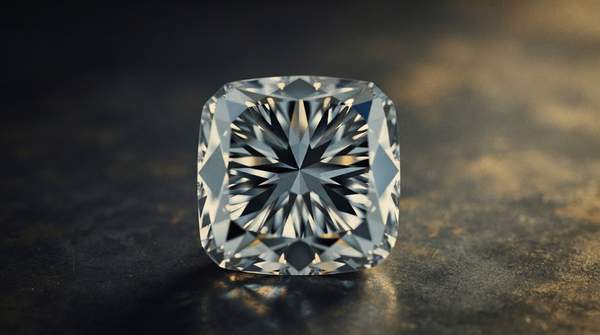
Every faceted gemstone embodies one of two broad cutting philosophies: scattering light to maximize brilliance, or organizing light to emphasize clarity, color, and geometric pattern. A round brilliant, cushion, or oval cut uses numerous small triangular and kite-shaped facets engineered to reflect light back toward the viewer, producing intense sparkle. A step cut such as the emerald cut uses long, parallel facets arranged in layers that produce broad flashes of light and a hall-of-mirrors effect, exposing the stone's internal character. Understanding this distinction—cut as light-handling strategy rather than mere shape—is what allows a collector to evaluate a gem against their aesthetic goals instead of relying on a list of cut names.
The Art of Light Manipulation in Gemstones
Gem cutting is often described as a fusion of science and art, and the description is literal. As CaratX's guide to gemstone cuts explains, the way a gemstone is cut—its shape, facet arrangement, and finish—determines not only its aesthetic appeal but also its value, durability, and the way it interacts with light. A high-quality rough stone, as Oveela's cuts guide puts it, requires exquisite craftsmanship to shine brightly. The cutter's decisions are therefore not decorative afterthoughts but the mechanism by which a mineral becomes a jewel.
Writing on the art of the gemstone cut, SOSNA Gems frames the craft as a matter of adaptation rather than formula. In colored gemstones especially, the cutter may aim to deepen color without darkening the stone, or to maintain brightness while preserving saturation—decisions that, as they note, "remain invisible in the final shape alone, yet they define how the gemstone performs." Most stones fall within established cutting styles, and those styles determine how light behaves and how color is displayed, well beyond surface aesthetics.
Understanding Light Interaction: Refraction, Reflection, and Sparkle
The visual vocabulary of faceted gems rests on a few optical phenomena. The Natural Gemstone Company's educational primer on light behavior in faceted gems identifies refraction, reflection, and dispersion as the essential concepts behind a gem's brilliance and color. Refraction is the bending of light as it passes from one medium into another; reflection sends that light back out; dispersion separates light into its spectral components. Gemology and jewelry design, the primer explains, aim to harness and optimize these effects for maximum visual impact.
When cutters speak of results rather than physics, they use terms like brilliance, fire, and scintillation. Oveela's guide notes that a gem's cut directly affects its brilliance, fire, and value. The distinction matters for a collector: the facet design does not merely shape the stone, it controls how much light is returned to the eye, in what pattern, and with how much color separation. Two stones of identical material and carat weight can look entirely different depending on how their facets handle these three phenomena.