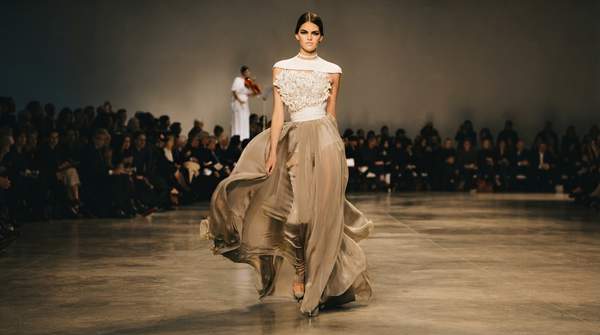
Three names now define the new guard of haute couture: Julie de Libran, Imane Ayissi, and Celia Kritharioti. Each has been officially included in the Paris Haute Couture Week calendar, and each brings a distinct contribution—de Libran through upcycled materials, Ayissi through sub-Saharan African textile traditions, and Kritharioti through the sculptural technique of moulage. Understanding what separates them is the clearest way to see how haute couture itself is changing.
The New Guard of Haute Couture: Beyond Tradition
Haute couture is not a loose compliment but a legally protected French designation, with the Fédération de la Haute Couture et de la Mode serving, as the standard reference describes it, as "the regulating commission that determines which fashion houses are eligible to be true haute couture houses." That gatekeeping role is precisely why the current wave of guest members matters: inclusion signals that the Fédération is widening the definition of what couture can be. Reporting by Kristen Batman in Harper's Bazaar identifies these designers as part of a "new guard," and their recognition points to a system deliberately diversifying beyond its traditional European houses. The three profiles that follow are drawn from published reports and designer statements rather than firsthand collection reviews, and they represent a curated selection, not an exhaustive survey.
Julie de Libran: Sustainable Elegance
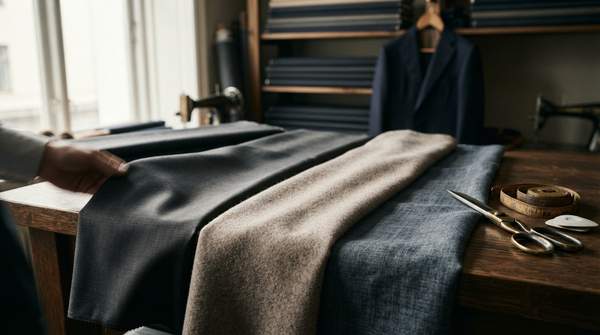
De Libran's contribution is environmental: she builds couture from what the industry would otherwise discard. "I have been working with leftover materials mills that I have been working with since my many years in the industry with a mindful production, and all garments are one-of-a-kind made-to-measure couture pieces or in numbered limited very small series, so with less waste as possible," she explained to Harper's Bazaar. The approach is notable because it applies couture's own logic—made-to-measure, singular garments—to sustainability. Rather than treating ecological responsibility as a constraint on luxury, her model makes scarcity and traceability the source of a garment's value. Her work demonstrates that couture's exclusivity and environmental responsibility can reinforce one another rather than compete.
Imane Ayissi: Weaving Cultural Narratives
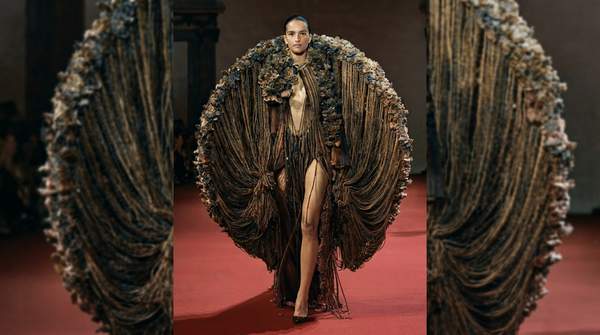
Ayissi made history in January 2020 as the first designer from sub-Saharan Africa to enter the official haute couture calendar, according to Harper's Bazaar, which notes that he still stands as an emerging name to watch despite working since the 1990s. His signature lies in specific traditional textiles: Obom, a bark cloth, and Faso Dan Fani, a hand-woven cotton, as described in coverage of his collection Ikorrok—whose title means "fallow land" and symbolizes rebirth and resilience. Rather than using heritage as a decorative reference, a review of his autumn-winter 2026/27 collection observes, he treats craftsmanship as a living practice, blending the raw, archaic textures of his heritage with fluid, sophisticated silhouettes. Sustainability is integral to his philosophy, with an emphasis on natural materials, artisanal production, and techniques that celebrate longevity.