When a niche perfume carries a striking price, the explanation is often written into its raw materials. Two of perfumery's most storied ingredients illustrate that "rarity" is not one condition but two very different ones: iris pallida root is rare because it demands years of deliberate, labor-intensive agriculture, while natural ambergris is rare because it forms by chance inside sperm whales and is found, not farmed. Understanding that distinction explains much of the cost, exclusivity, and mystique attached to high-end fragrance.
The Essence of Rarity: Iris Pallida vs. Natural Ambergris
The perfumery iris note comes from the rhizomes of Iris pallida, Iris germanica, and occasionally Iris florentina, with orris root from Iris pallida — the Dalmatian iris — considered the most prized material, cultivated primarily in Italy's Tuscany region and Morocco's Atlas Mountains, according to the CA Perfume Club's ingredient guide. Ambergris, by contrast, is a metabolic product formed in the gut of some sperm whales, found floating in the ocean or washed ashore on beaches, as the perfume house Maison Anthony Marmin and the fragrance writer Fulvio Ciccolo both describe.
These two materials sit at opposite ends of the sourcing spectrum. One is planted, tended, harvested, and aged on a schedule; the other is produced by a wild animal and recovered only when ocean currents deliver it. Yet both end up in the same place: the top of the perfumer's palette, priced accordingly, and used deliberately to signal luxury and exclusivity.
Iris Pallida: Cultivated Rarity and Intensive Processing
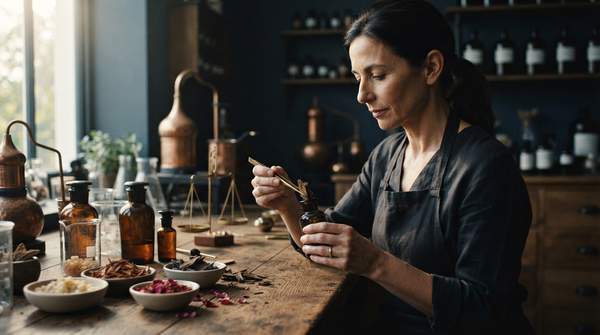
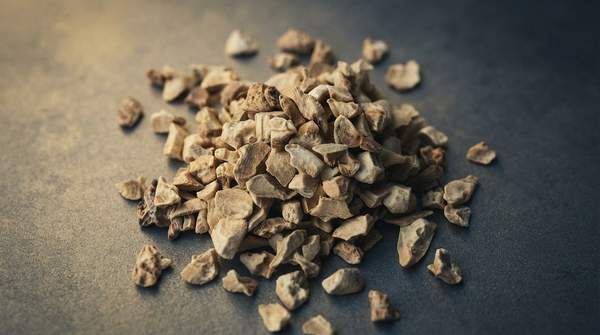
Orris root is a study in patience. Italy and Morocco together account for more than 80 percent of global orris production, with annual output estimated at less than 20 metric tons — a figure the CA Perfume Club attributes directly to the labor- and time-intensive process. Harvesting begins three years after planting, because the rhizomes need that period to accumulate irones, the compounds that give aged orris its characteristic scent.
The wait does not end at harvest. The roots are peeled, washed, and dried — traditionally in the sun or in ovens at 40°C — for a further two to five years. This extended aging is critical: fresh rhizomes are nearly odorless, but aging raises irone content from trace levels to 10–15 percent. Soil composition, climate, and altitude all influence the final quality of the material.
Every stage of that timeline — planting, three years of growth, hand processing, and years of curing — represents invested labor and tied-up capital. That is the essence of agricultural rarity: supply is knowable in principle, but only after years of committed, skilled work, and only in the regions where the plant thrives.