Modern personalized skincare works as a three-stage pipeline: diagnostic tools collect objective data about your skin, artificial intelligence interprets that data against known ingredient science, and the analysis is converted into specific ingredient recommendations or fully custom formulations. The decisive shift from earlier methods is the move from subjective self-assessment to measurable visual and biological inputs.
The Shift to Data-Driven Skincare
Traditional skincare has long relied on generalized formulations and recommendations that overlook the intersection between individual skin physiology—barrier function, sebum production—and contextual variables like climate, pollution exposure, and cultural skincare practices, which limits effectiveness across diverse populations, as a review on artificial intelligence in customized skincare regimens notes. Early personalization platforms did ask questions, but their answers came from questionnaires about skin type and dominant concerns, and their effectiveness was constrained by reliance on subjective self-assessments.
Recent advances in AI and cosmetic dermatology have enabled more objective, data-driven approaches. New technologies now use photo analysis to customize regimens based on visual assessment, with L'Oréal's acquisition of the augmented-reality and AI specialist Modiface marking a turning point in that transformation. A separate systematic review of cosmetogenomics, authored by Diala Haykal and colleagues in Frontiers, frames the same trajectory: traditional regimens relied on generalized formulations, while biological profiling now enables treatments aligned with an individual's underlying characteristics.
Stage 1: Advanced Data Collection
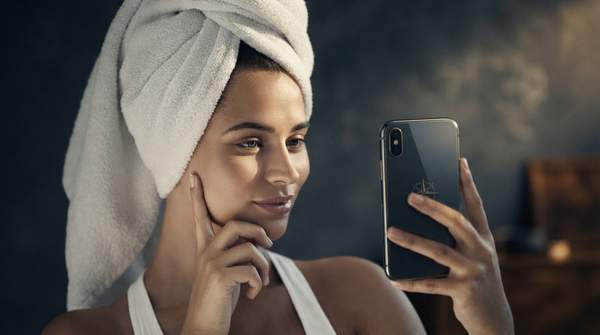
The two primary collection methods gather fundamentally different kinds of information. AI-driven photo analysis captures visual data—surface texture, pigmentation patterns, and visible signs of aging or sensitivity—which algorithms then assess to characterize skin concerns. It is fast, non-invasive, and increasingly available through smartphone apps and in-store diagnostic stations.
Skin microbiome testing, by contrast, samples the biological layer of microorganisms living on the skin. Historically this required complex laboratory equipment, DNA sequencing, and long turnaround times, according to Byome Labs, whose Byome Derma kit uses technology similar to a COVID antigen test to measure 25 different skin parameters in real time. Where photo analysis reads what the skin looks like, microbiome testing reads its microbial profile—an indicator of the skin's ecological balance and, by extension, its needs.